<?xml version="1.0" encoding="UTF-8"?>
<!--Generated by Squarespace Site Server v5.9.1 (http://www.squarespace.com/) on Tue, 09 Feb 2010 12:40:40 GMT--><rss xmlns:content="http://purl.org/rss/1.0/modules/content/" xmlns:wfw="http://wellformedweb.org/CommentAPI/" xmlns:itunes="http://www.itunes.com/dtds/podcast-1.0.dtd" xmlns:dc="http://purl.org/dc/elements/1.1/" version="2.0"><channel><title>Blog</title><link>http://www.organicnation.tv/blog/</link><description></description><lastBuildDate>Tue, 09 Feb 2010 04:51:11 +0000</lastBuildDate><copyright></copyright><language>en-US</language><generator>Squarespace Site Server v5.9.1 (http://www.squarespace.com/)</generator><item><title>Dirty Dozen: Why to Always Eat Organic Kale</title><category>Dirty Dozen</category><category>Environmental Working Group</category><category>kale</category><category>organic gardening</category><category>pesticides</category><dc:creator>OrganicNation.tv</dc:creator><pubDate>Mon, 08 Feb 2010 17:41:22 +0000</pubDate><link>http://www.organicnation.tv/blog/dirty-dozen-why-to-always-eat-organic-kale.html</link><guid isPermaLink="false">338577:3593695:6610780</guid><description><![CDATA[<p><span class="full-image-block ssNonEditable"><span><img src="http://www.organicnation.tv/storage/organic kale vegetable garden.jpg?__SQUARESPACE_CACHEVERSION=1265652980835" alt="" /></span></span><em>Dirty Dozen is an ongoing Organic Nation series that seeks to explain the benefits of certain organic foods and products over their conventional counterparts. </em><em>To see other recent posts in this series, click <a href="../../blog/category/dirty-dozen">here</a>. </em></p>
<p>When the <a href="http://www.ewg.org/home">Environmental Working Group</a> released their latest wallet-size "<a href="http://www.foodnews.org/">Dirty Dozen and Clean 15</a>" scorecard last spring, kale, the most crinkly of the hearty greens, was catapulted into eighth place on the list of conventional fruits and veggies to be avoided.</p>
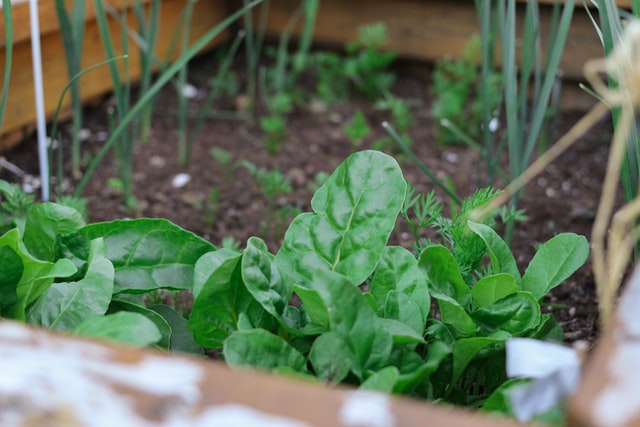
<p>Kale is tasty and nutritious stuff, and it's great in salads, soups, or even just sauteed with onions and olive oil. The other neat thing about kale is that it can survive year-round -- even in deep snow. When I visited my parents near Buffalo, NY last month, my mom went out and picked some fresh kale from beneath a six-inch layer of snow for our dinner.</p>
<p>However, according to EWG, it's one of the foods that should always be grown organically.</p>
<p>It's surprising to see that kale is sprayed with so many chemicals, because it seems like such an easy plant to grow. Because of it's heartiness, kale is great for gardens, but it can attract some pretty pesky pests when it's grown on a larger scale in an agricultural setting. Aphids, diamondback moths, and flea beetles are all considered to be major pests to kale.</p>
<p>The EWG's list isn't based on the total amount of chemicals sprayed on fruits and vegetables in the field or on the vine. Instead, most of the data they use to compile the "Dirty Dozen" list comes from tests taken from foods that are ready to be eaten. According to the website, "nearly all the studies used to create the list test produce after it has been rinsed or peeled."</p>
<p>In addition to EWG's scorecard the new website <a href="http://www.whatsonmyfood.org/food.jsp?food=GK">whatsonmyfood.org</a> gives conventional kale very low marks. According to that site, conventional kale contains 49 pesticide residues found by the USDA pesticide data program. Those chemicals include two dozen possible hormone disruptors, 10 neurotoxins, and seven known or probable carcinogens. Yummy!</p>
<p>-<em>Mark</em></p>]]></description><wfw:commentRss>http://www.organicnation.tv/blog/rss-comments-entry-6610780.xml</wfw:commentRss></item><item><title>Today in Organic: February 4, 2010</title><category>Today in Organic</category><dc:creator>OrganicNation.tv</dc:creator><pubDate>Thu, 04 Feb 2010 17:03:04 +0000</pubDate><link>http://www.organicnation.tv/blog/today-in-organic-february-4-2010.html</link><guid isPermaLink="false">338577:3593695:6560304</guid><description><![CDATA[<p><span class="full-image-block ssNonEditable"><span><img src="http://www.organicnation.tv/storage/Zach%20Bowen%20salt.jpg?__SQUARESPACE_CACHEVERSION=1265301398697" alt="" /></span><span class="thumbnail-caption" style="width: 640px;">Photo by Zach Bowen</span></span></p>
<ul>
<li>Continuing with the biodynamic theme, <a href="http://www.simplesteps.org/thisthats/organic-vs-biodynamic-wine"><strong>SimpleSteps.org</strong> weighs organic certification vs. biodynamic certification</a> in wine. (Winner: dual certification.)</li>
</ul>
<ul>
<li>The results are in from USDA's first in-depth survey of organic farming, and fewer than 1 percent of American farms are organic, <a href="http://online.wsj.com/article/SB10001424052748704259304575043712004197080.html">the <strong>Wall Street Journal</strong> reports</a>. </li>
</ul>
<ul>
<li>Food, Inc. was nominated for the "Best Documentary" Oscar, which ought to give the film a boost, but <a href="http://www.nbcwashington.com/blogs/popcornbiz/For-Food-Inc-Oscar-Nominations-Are-Big-Oprah-Bigger-83473987.html">praise from Oprah on her show last week</a> might prove to be more influential.&nbsp;</li>
</ul>
<ul>
<li>The International Commission for the Conservation of Atlantic Tunu is mismanaging Atlantic albacore into extinction, <a href="http://politicsoftheplate.com/?p=245">according to Barry Estabrook at <strong>Politics of the Plate</strong></a>. </li>
</ul>
<ul>
<li>Why are West Coast organic farms more profitable than their East Coast counterparts? <a href="http://www.chewswise.com/chews/2009/11/one-farmer-parses-organic-vs-local-costs.html?utm_source=feedburner&amp;utm_medium=feed&amp;utm_campaign=Feed:+ChewsWise+(Chews+Wise)&amp;utm_content=Google+Reader">Four reasons, says </a><a href="http://www.chewswise.com/chews/2009/11/one-farmer-parses-organic-vs-local-costs.html?utm_source=feedburner&amp;utm_medium=feed&amp;utm_campaign=Feed:+ChewsWise+(Chews+Wise)&amp;utm_content=Google+Reader">Samuel Fromartz</a>: labor costs, seasonality, weather, and economies of scale. </li>
</ul>
<ul>
<li>Access to Aquaponics is planning a 55,000 square-foot aquaponics greenhouse near Cleveland, OH. <a href="http://www.treehugger.com/files/2010/01/aquaponics-grows-up.php?campaign=th_rss_food">Read about it at <strong>TreeHugger</strong></a>. </li>
</ul>]]></description><wfw:commentRss>http://www.organicnation.tv/blog/rss-comments-entry-6560304.xml</wfw:commentRss></item><item><title>New Video: What Is Biodynamic Farming?</title><category>Farming</category><category>Interviews</category><category>Rudolf Steiner</category><category>Videos</category><category>biodynamic farming</category><category>farming</category><category>organic farming</category><category>sustainable farming</category><dc:creator>OrganicNation.tv</dc:creator><pubDate>Tue, 02 Feb 2010 16:19:51 +0000</pubDate><link>http://www.organicnation.tv/blog/new-video-what-is-biodynamic-farming.html</link><guid isPermaLink="false">338577:3593695:6531840</guid><description><![CDATA[<p><object width="600" height="340"><param name="allowfullscreen" value="true" /><param name="allowscriptaccess" value="always" /><param name="movie" value="http://vimeo.com/moogaloop.swf?clip_id=9147387&amp;server=vimeo.com&amp;show_title=1&amp;show_byline=0&amp;show_portrait=0&amp;color=5cdb6b&amp;fullscreen=1" /><embed src="http://vimeo.com/moogaloop.swf?clip_id=9147387&amp;server=vimeo.com&amp;show_title=1&amp;show_byline=0&amp;show_portrait=0&amp;color=5cdb6b&amp;fullscreen=1" type="application/x-shockwave-flash" allowfullscreen="true" allowscriptaccess="always" width="600" height="340"></embed></object></p>
<p>During our travels across America, I've been lucky to visit many  beautiful farms and gardens. But none have captivated my imagination  quite like Frog Hill Farm in Port Townsend, Washington. The farm's  diverse acres include woodlands, an herb and flower garden, wetlands,  pastures for goats, ducks and chickens as well as neat rows of  vegetables. Sebastian Aguilar, who runs the farm with his family, has  taken his organic certification to the next level by employing  biodynamic farming practices.﻿</p>
<p>An often misunderstood technique due to its roots in  Rudolph  Steiner's esoteric spiritual philosophy, biodynamic agriculture treats  farms as unified organisms and emphasizes the relationship of soil,  plants and animals. Biodynamic farms try to eliminate inputs (such as fertilizers) and instead create a closed-loop system of soil maintenance using cover crops, manure and herbal composts.</p>
<p>Learn more about biodynamic farming via the <a href="http://www.biodynamics.com/">Biodynamic Farming and Gardening Association</a>.</p>
<p><em>Special thanks to <a href="http://www.robingrey.com/">Robin Grey</a> for the use of his music in this video!</em></p>
<p><em>-Dorothee</em></p>]]></description><wfw:commentRss>http://www.organicnation.tv/blog/rss-comments-entry-6531840.xml</wfw:commentRss></item><item><title>Fish Food: Chicago's Appetite for Aquaponics</title><category>AquaRanch</category><category>Chicago</category><category>Growing Power</category><category>Mindful Metropolis</category><category>Myles Harston</category><category>Urban Farming</category><category>Will Allen</category><category>aquaponics</category><dc:creator>OrganicNation.tv</dc:creator><pubDate>Tue, 02 Feb 2010 15:01:05 +0000</pubDate><link>http://www.organicnation.tv/blog/fish-food-chicagos-appetite-for-aquaponics.html</link><guid isPermaLink="false">338577:3593695:6524918</guid><description><![CDATA[<p><span class="full-image-block ssNonEditable"><span><img style="width: 640px;" src="http://www.organicnation.tv/storage/Picture 3.png?__SQUARESPACE_CACHEVERSION=1265072717916" alt="" /></span></span><em>The February issue of </em><a href="http://www.mindfulmetropolis.com/Home"><strong>Mindful Metropolis</strong></a><em>, a Chicago magazine about green living, is on newsstands, and it features an article I wrote about several organic aquaponics farms that are planned for the city. </em></p>
<p><em>Here's a excerpt:</em></p>
<p style="padding-left: 30px;">In aquaponics, the plants are  fertilized with nutrients and bacteria from fish water, and the plant  roots filter the water so that it can be circulated back into the fish  tanks, creating a symbiotic loop between fish and plants. Growing Power  actually has several urban farms in Chicago that are managed by Allen&rsquo;s  daughter Erika, but none of them incorporate aquaponics technology.  In fact, no commercial aquaponics operations exist in Chicago, because  Chicago law doesn&rsquo;t currently allow it, but several key players would  like to see that change.&nbsp;</p>
<p style="padding-left: 30px;">&ldquo;There&rsquo;s nothing on the  books in terms of the zoning as far as fish are concerned, but because  they&rsquo;re living beings they&rsquo;re considered livestock,&rdquo; says 46th  Ward Alderman Helen Shiller. &ldquo;Well, obviously we have to separate  that.&rdquo;&nbsp;</p>
<p style="padding-left: 30px;">Shiller hopes to convert the  former Salvation Army building at the corner of Broadway and Sunnyside  Avenue in Uptown into a multi-use building that would house aquaponics  fish tanks and grow beds, an educational center, a community kitchen,  and an on-site market. But she needs to address zoning issues in order  for that to become a reality.&nbsp;</p>
<p style="padding-left: 30px;">Allen caught a break with the  Growing Power property, because it was already zoned for agricultural  use when he bought it. &ldquo;He&rsquo;s the last farmer in Milwaukee,&rdquo; Shiller  says. &ldquo;You could probably not do what he&rsquo;s doing anywhere else in  a city without having the same problems that we&rsquo;re having.&rdquo; Shiller  recently raised the aquaponics issue with the Chicago Departments of  Zoning and Community Development, and she hopes to see the livestock  designation change within the next year. &ldquo;More and more of our colleagues  are saying, &lsquo;We really want to do that, so as soon as you figure it  out we&rsquo;re going to do it,&rsquo;&rdquo; she says.</p>
<p><a href="http://digital.mindfulmetropolis.com/publication/?i=30937&amp;page=1&amp;p=13">Read the whole story at <strong>Mindful Metropolis</strong></a>, where you can read a digital version of the entire magazine.</p>
<p>-<em>Mark</em></p>]]></description><wfw:commentRss>http://www.organicnation.tv/blog/rss-comments-entry-6524918.xml</wfw:commentRss></item><item><title>Organic Pick of the Week: Simple Shoes #2</title><category>Organic Pick of the Week</category><category>Simple Shoes</category><category>eco-fashion</category><dc:creator>OrganicNation.tv</dc:creator><pubDate>Mon, 01 Feb 2010 15:30:00 +0000</pubDate><link>http://www.organicnation.tv/blog/organic-pick-of-the-week-simple-shoes-2.html</link><guid isPermaLink="false">338577:3593695:6508666</guid><description><![CDATA[<p><span class="full-image-block ssNonEditable"><span><a href="http://www.flickr.com/photos/organicnation/4320144604/sizes/o/"><img src="http://www.organicnation.tv/storage/simple%20shoes%20hightops.jpg?__SQUARESPACE_CACHEVERSION=1264993013130" alt="" /></a></span><span class="thumbnail-caption" style="width: 640px;">Photo: Mark Andrew Boyer</span></span></p>
<p>With the motto, "<span class="bio">shoes for a happy planet", <a href="http://www.simpleshoes.com">Simple Shoes</a></span> is leading the footwear industry in a quest to create sustainable products that are both comfortable and stylish. That's why I'm excited to showcase my two favorite pairs from their current collection, which are both created with organic cotton and eco-friendly materials.</p>
<p>The men's <a href="http://www.simpleshoes.com/clearancedetails.aspx?g=m&amp;productid=2234&amp;model=CARwalk%20-%20Wool">Carwalk</a> shoe (above) is made with eco-friendly wool that comes <span id="desc">straight from  the sheep&rsquo;s annual haircut</span>. The shoes also have an organic cotton fleece lining to keep your feet toasty warm. I love the "high-top" shape paired with plaid for a funky dressed-up feel.</p>
<p>The women's vegan <a href="http://www.simpleshoes.com/ProductDetails.aspx?g=w&amp;productID=9560&amp;model=Pinwheel+-+Hemp">Pinwheel</a> sneaker (below) is made of hemp fiber with an organic cotton lining and laces. I love the bright stripes hidden inside and I can totally imagine them paired with jeans or a breezy spring dress. As an added bonus, the bottoms of both shoes are made using material from recycled car tires!</p>
<p>Did you know that Simple Shoes also makes bags? Check out <a href="http://www.organicnation.tv/blog/organic-pick-of-the-week-simple-shoes.html">my post about the Blottoe bag</a>.</p>
<p>Also, check out Simple Shoes on <a href="http://www.facebook.com/Simple">Facebook</a> and <a href="http://twitter.com/simpleshoes">Twitter.</a></p>
<p><em>-Dorothee</em><span id="desc"> <br /></span></p>
<p><span class="full-image-block ssNonEditable"><span><a href="http://www.flickr.com/photos/organicnation/4321105206/sizes/o/"><img src="http://www.organicnation.tv/storage/organicnation%20simple%20shoes.jpg?__SQUARESPACE_CACHEVERSION=1264992969759" alt="" /></a></span><span class="thumbnail-caption" style="width: 640px;">Photo: Mark Andrew Boyer</span></span></p>]]></description><wfw:commentRss>http://www.organicnation.tv/blog/rss-comments-entry-6508666.xml</wfw:commentRss></item><item><title>Green Grocer Chicago's 2nd Anniversary Party</title><category>Chicago</category><category>Green Grocer</category><dc:creator>OrganicNation.tv</dc:creator><pubDate>Mon, 01 Feb 2010 15:00:03 +0000</pubDate><link>http://www.organicnation.tv/blog/green-grocer-chicagos-2nd-anniversary-party.html</link><guid isPermaLink="false">338577:3593695:6513864</guid><description><![CDATA[<p><span class="full-image-block ssNonEditable"><span><img src="http://www.organicnation.tv/storage/green grocer second anniversary party 1.jpg?__SQUARESPACE_CACHEVERSION=1264996811660" alt="" /></span></span></p>
<p>Yesterday was a special occasion for the OrganicNation staff. Our neighborhood grocery store, <a href="http://www.greengrocerchicago.com/">Green Grocer Chicago</a>, celebrated its second anniversary yesterday, and we were on hand for a couple hours in the afternoon, selling raffle tickets and munching on the free samples.</p>
<p>Green Grocer gets mentioned a lot on this blog for a couple of reasons. Owners Gary Stephens and Cassie Green (pictured below with Dorothee) do an excellent job of sourcing the majority of the food in the shop from local and organic producers, and for a small storefront, they have an excellent selection. They're one of the only places where you can dependably find high-quality local and organic produce year-round in Chicago. Most importantly though, they're located just a block from where I live, meaning that I don't have to get in the car, and I never buy more than I can carry.</p>
<p>To me, the existence of small, independent grocery stores like Green Grocer is crucial to the sustainable food movement. Farmers markets are great, and I shop at them whenever it's convenient, but a great independent grocery is sort of like a daily, year-round farmers market, and it's another place to meet people who are passionate about good food.</p>
<p>-<em>Mark</em></p>
<table>
<tbody>
<tr>
<td><span class="full-image-float-left ssNonEditable"><span><a href="http://www.flickr.com/photos/organicnation/4320606685/sizes/l/"><img src="http://www.organicnation.tv/storage/dorothee%20and%20cassie%20green.jpg?__SQUARESPACE_CACHEVERSION=1264998738624" alt="" /></a></span></span></td>
<td><span class="full-image-float-left ssNonEditable"><span><a href="http://www.flickr.com/photos/organicnation/4320606447/sizes/l/"><img src="http://www.organicnation.tv/storage/green%20grocer%202%20year%20anniversary%20window.jpg?__SQUARESPACE_CACHEVERSION=1264998720566" alt="" /></a></span></span></td>
</tr>
</tbody>
</table>]]></description><wfw:commentRss>http://www.organicnation.tv/blog/rss-comments-entry-6513864.xml</wfw:commentRss></item><item><title>Feds to Release New Rules for Organic Dairy</title><category>Food Policy</category><category>Organic Products</category><category>Take Action</category><category>milk</category><category>organic dairy</category><dc:creator>OrganicNation.tv</dc:creator><pubDate>Thu, 28 Jan 2010 18:23:27 +0000</pubDate><link>http://www.organicnation.tv/blog/feds-to-release-new-rules-for-organic-dairy.html</link><guid isPermaLink="false">338577:3593695:6454256</guid><description><![CDATA[<p><span class="full-image-block ssNonEditable"><span><img src="http://www.organicnation.tv/storage/farms yes factory farms no activist.jpg?__SQUARESPACE_CACHEVERSION=1264703042123" alt="" /></span></span></p>
<p>It's been a long time coming, but the Office of Management and Budget is now reviewing new rules that would clarify exactly how much time dairy cows must spend on pasture to be certified organic, <a href="http://dinersjournal.blogs.nytimes.com/2010/01/27/how-much-grass-must-be-in-organic-milk/">according to the <strong>New York Times</strong></a>.</p>
<p>The document "has the power to either destroy the nation's 1,800 family-operated organic dairy farms or come to their rescue," <a href="http://politicsoftheplate.com/?p=223">writes Barry Estabrook on his <strong>Politics of the Plate blog</strong></a>. Estabrook wrote an excellent post explaining how organic dairy got to this point, and how enormous CAFOs managed to get organic certification in the first place.</p>
<blockquote>
<p>"Beginning in the mid-2000s, at about the time when it became evident that the green &ldquo;USDA Organic&rdquo; label translated into bigger profits, huge Confined Animal Feeding Operations (CAFOs) with herds of up to 10,000 cows located in western states got into the organic milk business."</p>
</blockquote>
<p>Some factory farmers went as far as to refer to "a dirt feedlot with hay bale feeders" as "pasture," according to the <a href="http://www.cornucopia.org/">Cornucopia Institute</a>. The loose definition of pasture is part of what has enabled big dairy producers to produce cheap "organic" milk, which has in turn created a surplus of organic milk and driven many smaller organic dairy producers out of business.</p>
<p>Nobody is exactly sure what the new regulations are that OMB has drafted, because they haven't been released to the public yet, but there's concern that Big Dairy interests have the ear of the White House. Powerful factory farm interests "have privately met with OMB officials and are seeking to weaken the new rule," <a href="http://www.cornucopia.org/2010/01/action-alert/#more-2551">according to a Cornucopia Institute action alert</a>, which urges people to write the White House and demand meaningful pasture grazing.&nbsp;</p>
<p>-<em>Mark</em></p>]]></description><wfw:commentRss>http://www.organicnation.tv/blog/rss-comments-entry-6454256.xml</wfw:commentRss></item><item><title>Today in Organic: January 27, 2010</title><category>Today in Organic</category><dc:creator>OrganicNation.tv</dc:creator><pubDate>Wed, 27 Jan 2010 17:10:10 +0000</pubDate><link>http://www.organicnation.tv/blog/today-in-organic-january-27-2010.html</link><guid isPermaLink="false">338577:3593695:6443306</guid><description><![CDATA[<p><span class="full-image-block ssNonEditable"><span><img src="http://www.organicnation.tv/storage/foodsystem.JPG?__SQUARESPACE_CACHEVERSION=1264611116252" alt="" /></span></span></p>
<ul>
<li>The image above was made by <a href="http://www.msu.edu/%7Ehowardp/" target="_blank">Phil Howard</a> from Michigan State University.</li>
</ul>
<ul>
<li>The German edition of The Financial Times revealed that clothes marked with "organic cotton" labels in <a href="http://greeninc.blogs.nytimes.com/2010/01/27/questioning-the-purity-of-organic-cotton/">H&amp;M stores actually contained GM cotton from India</a>.</li>
</ul>
<ul>
<li>In a related story, <a href="http://www.nytimes.com/2010/01/07/nyregion/07clothes.html">The New York Times reported earlier this month</a> that the H&amp;M on 34th Street in New York was discarding bags of unsold clothes &mdash; all slashed with a razor blade to make sure they wouldn't be sold elsewhere.</li>
</ul>
<ul>
<li><a href="http://newsblogs.chicagotribune.com/the-problem-solver/2010/01/deans-foods-driving-up-milk-prices.html">The Department of Justice filed an antitrust suit against dairy villain Dean Foods last week</a>, arguing that Dean's acquisition of Foremost Farms in Wisconsin eliminated competition in Illinois, Wisconsin and Michigan.&nbsp;</li>
</ul>
<ul>
<li><a href="http://www.thepacker.com/Survey-shows-fruit--vegetable-consumption-down-in-2009/Article.aspx?articleid=978733&amp;authorid=117&amp;feedid=215&amp;src=top">Fruit and vegetable consumption</a> took a slight dip in 2009.&nbsp;</li>
</ul>
<ul>
<li>A brewery in Oregon spent $7,000 <a href="http://www.mnn.com/food/beer/stories/oregon-brewery-is-serious-about-being-green">purchasing all of its employees bikes</a> to lower its carbon footprint (and to get a tax break).&nbsp;</li>
</ul>
<ul>
<li>"<a href="http://blogs.smithsonianmag.com/food/2010/01/26/turmeric-as-health-food/">Turmeric as health food?</a>" asks Smithsonian food blogger Abby Callard. Turns out the yellow stuff has some pretty special properties. </li>
</ul>]]></description><wfw:commentRss>http://www.organicnation.tv/blog/rss-comments-entry-6443306.xml</wfw:commentRss></item><item><title>Thoughts on No Impact Man</title><category>Reviews</category><dc:creator>OrganicNation.tv</dc:creator><pubDate>Mon, 25 Jan 2010 19:21:15 +0000</pubDate><link>http://www.organicnation.tv/blog/thoughts-on-no-impact-man.html</link><guid isPermaLink="false">338577:3593695:6427208</guid><description><![CDATA[<p><span class="full-image-float-right ssNonEditable"><span><img src="http://www.organicnation.tv/storage/no-impact-man.jpg?__SQUARESPACE_CACHEVERSION=1264445581866" alt="" /></span></span>I attempted to see <a href="http://www.imdb.com/title/tt1280011/"><em>No Impact Man</em></a> about two months ago, but the screener we got was cracked. At the time, I figured it was probably for the best, because I had read the New York Times' 2007 story about the Beavan family ("<a href="http://www.nytimes.com/2007/03/22/garden/22impact.html">The Year Without Toilet Paper</a>") and Elizabeth Kolbert's more recent <a href="http://www.newyorker.com/arts/critics/atlarge/2009/08/31/090831crat_atlarge_kolbert?currentPage=all"><em>New Yorker</em> sideswipe</a> of the nouveau-Thoreauvian eco-stunt, as she calls it, and I agreed with everything I read.</p>
<p>It sounds like (and is) a cheap ploy for media attention: A family of three in Midtown Manhattan attempt to live a full year producing little-to-no environmental impact. They use no carbon-fueled transportation, produce no trash, and they even go as far as to have the electricity turned off in their 5th Avenue apartment.</p>
<p>All of those things make for great reality TV, but I was pleasantly surprised to find that the part of the "experiment" that's emphasized the most is actually food. Everything they eat for the No Impact year is organic and comes from within a 250-mile radius of New York. They go on excursions to Upstate New York farms to see where their food comes from; Colin starts growing vegetables in a community garden; they get to know the vendors at the Union Square greenmarket; Michelle learns how to cook; and they compost their food waste in a fly-infested worm bin.</p>
<p>I'm not sure if food is given so much importance in the film because the Beavans understand what a great contributor of greenhouse gasses conventional agriculture is, or simply because it's easier to document on screen than other actions that have environmental consequences, but either way, it sends the right message.</p>
<p>At the end of the film, Colin reflects on what he learned during his No Impact year, and he offers this:</p>
<blockquote>
<p>"People ask, 'If I could just do one thing, what should it be?' I would say, if there was only one thing to do, it would be to volunteer with an environmental organization. Part of the reason for that is because there's community. I believe very strongly that a lot of the environmental problems in our planet have come because of the breakdown of community, because without community, none of us feel accountable to anybody else."</p>
</blockquote>
<p>Even though it's a kind of a silly stunt, I think there's some value that can be taken from this.</p>
<p>-<em>Mark</em></p>]]></description><wfw:commentRss>http://www.organicnation.tv/blog/rss-comments-entry-6427208.xml</wfw:commentRss></item><item><title>Today in Organic: January 22, 2010</title><category>Today in Organic</category><dc:creator>OrganicNation.tv</dc:creator><pubDate>Fri, 22 Jan 2010 17:01:55 +0000</pubDate><link>http://www.organicnation.tv/blog/today-in-organic-january-22-2010.html</link><guid isPermaLink="false">338577:3593695:6399993</guid><description><![CDATA[<p><span class="full-image-block ssNonEditable"><span><img src="http://www.organicnation.tv/storage/wild grass at colinwood farm.jpg?__SQUARESPACE_CACHEVERSION=1264179752791" alt="" /></span></span></p>
<ul>
<li>Slow Food USA President Josh Viertel lays out his argument for <a href="http://www.slowfoodusa.org/index.php/slow_food/blog_post/why_big_ag_wont_feed_the_world/#When:21:15:08Z">why Big Ag won't feed the world</a>.&nbsp;</li>
</ul>
<ul>
<li><strong>GOOD</strong> asks if <a href="http://www.good.is/post/is-decentralized-urban-farming-the-future-of-food/">decentralized urban farming is the future of food</a>.</li>
</ul>
<ul>
<li>"Even as consumer demand has soared, the number of local processing facilities nationwide has plummeted," <a href="http://food.theatlantic.com/sustainability/the-need-for-custom-slaughter.php">writes Barry Estabrook about slaughter facilities in an excellent <strong>Atlantic </strong>article</a>.&nbsp;</li>
</ul>
<ul>
<li>Tom Philpott makes the case for <a href="http://www.grist.org/article/2010-01-21-why-you-should-go-see-fantastic-mr.-fox/">why everyone should go see Wes Anderson's newish movie, The Fantastic Mr Fox</a>.&nbsp;</li>
</ul>
<ul>
<li>EarthJustice and the Center for Food Safety lawyers are <a href="http://iowaindependent.com/26051/environmental-groups-seek-to-halt-use-of-genetically-modified-sugar-beets">asking the Supreme Court to hear a case calling for a ban on Monsanto's Roundup Ready sugar beets</a>. </li>
</ul>]]></description><wfw:commentRss>http://www.organicnation.tv/blog/rss-comments-entry-6399993.xml</wfw:commentRss></item></channel></rss>